

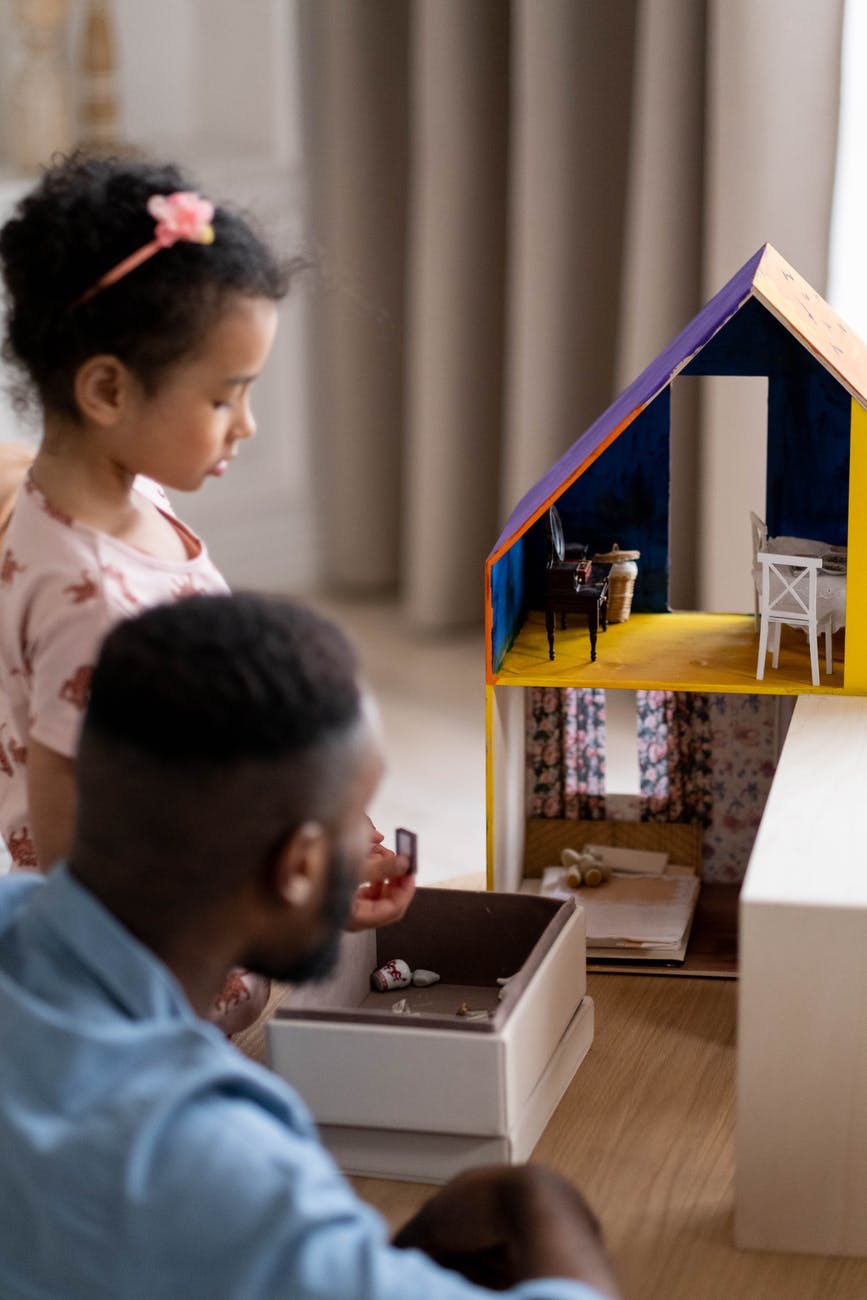


What is play therapy?
Primarily used for children, play therapy involves a trained practitioner (that’s me!) encouraging the client to use toys, age-appropriate language, and games to explore life events that are affecting current circumstances and behavior.
I practice prescriptive play therapy (drawing from multiple approaches and using the most effective techniques based on the individual child and their presenting concerns) but usually begin with child-centered play therapy to establish trust and rapport. The most important factor in play therapy is the relationship between the therapist and the child.
What is Child-Parent Psychotherapy?
CPP is a dyadic, relationship-based therapy that was developed to promote and facilitate attachment and healing between children and their caregivers. Parents participate in CPP, which makes it different from play therapy. It is appropriate for children who have experienced domestic violence, incarceration or separation, sexual abuse, the death of a caregiver, perinatal mood disorders, and other significant traumatic events.
Which type of therapy is best for my kid?
That depends on the kid! We can figure it out together.
Do you make custody recommendations?
No. It is outside my scope of practice, and when I’m focused on gathering information from your child in order to make a custody recommendation, I’m not doing my job.
What can you help with?
Most of my training and expertise is in working with families who have dealt with significant trauma. This includes children who have experienced sexual assault, physical abuse and/or neglect, the death of a parent or sibling, parental incarceration, domestic violence, and those in the foster care system, and mothers who have experienced intimate partner violence, traumatic births, miscarriage or stillbirth, and infant loss.
I also have experience and training supporting mothers who are struggling with perinatal mood and anxiety disorders (PMAD). I believe there is an enormous amount of overlap between maternal mental health and infant and early childhood mental health, and that investing in mothers is one of the surest ways of helping children thrive.
Do you accept insurance?
I am currently in-network with Anthem/BCBS, UHC, and Aetna. I can also offer a superbill for you to submit to your insurance provider. Contact me for more information.
What is Athens Parent Wellbeing?
Athens Parent Wellbeing is a local non-profit that promotes the mental well-being of mothers and families throughout pregnancy and the postpartum period in the Athens area by providing education, resources, and support. I’m proud to be one of the therapists providing that support!
Who are you the best fit for?
Everyone has different needs in a mental health provider – what works for one person doesn’t work for another, and it doesn’t mean anyone is doing anything wrong. There are plenty of excellent therapists here in Athens (I share an office with a whole bunch of them). It can be hard to know who will be the best fit for you or your child – I get it! I can help. I am more than happy to make whatever referrals you need.
What experience do you have?
I’ve worked in many different settings and situations: caring for small children and teenagers in emergency shelters, conducting home visits for adults and children with developmental disabilities, providing support to women who are struggling with perinatal mood disorders, and helping families with medically fragile children access services. I also work with bereaved families through Kate’s Club and mothers through Athens Parent Wellbeing.
In addition to providing therapy, I’m also currently working with the Department of Public Health with a program called Babies Can’t Wait – I provide early intervention services to children and families in rural areas in Oglethorpe, Morgan, and Greene counties. I’m also trained in Infant and Early Childhood Mental Health, so I am comfortable working with children as young as 18 months old. If this doesn’t sound like what you’re looking for, I’m happy to help you find a therapist who would be a better fit.
OK, I’m in. How do we get started?
The first time we meet, I’ll conduct what is called an intake, and I will always ask that parents attend this. This is just going to be information gathering – I am going to ask you a ton of nosy questions. Sometimes your child should attend with you to get comfortable in the playroom, but under some circumstances, you might want to discuss things with me outside your child’s hearing. This is particularly important if your child has experienced abuse or trauma. If this is the case, feel free to come by yourself to the intake. Because securing childcare can be tricky, we can always conduct the intake via telehealth. We will come up with some goals, and you will decide if I seem like a good fit for your family.
Can you make my kid behave?
I can’t even make my own kids behave, so probably not. But I might be able to tell you what they’re trying to accomplish with the behavior.
How long is play therapy going to take?
Every child is different, and timelines are unpredictable and depend on a lot of different factors. I promise I’ll always be transparent about the progress your child is making.
Can I stay for the session?
We never want your child to feel unsafe or out of control when coming to therapy, but, for play therapy, ideally we will be working towards having caregivers wait outside during therapy. This might take a few visits.
For CPP, you’re with us the whole time.
For parenting support, it is just you and me.
Can you be my therapist too?
Maybe! I specialize in maternal, infant, and early childhood mental health – that usually includes women who are somewhere on their family-building journey, tiny kids, and older children 8 and under. If you don’t fall into one of those categories, I have a long list of excellent local therapists I would be happy to refer you to.
Anything else?
Dress your kid in clothes that can get messed up. Be patient. You know more than you think you do. You’re doing great. Your kid is doing great. Children are resilient. Thank you so much for trusting me with your child.




 Hastie Therapy Services